
Winter 2026, Issue 4 - read it below or see a PDF of this issue.
You're Part of Something Big
It's time to share how enrollment is going. We gathered this information in January 2026 to share with you. These details are about people in Phase 2 who are getting anti-TNF treatment (adalimumab or infliximab).
453 children and adolescents were in Phase 2 and getting anti-TNF treatment.
About 13% are under 10 years old.
64% are boys. 36% are girls.
The average age is about 12.
Enrollment is planned to end by Labor Day 2026.
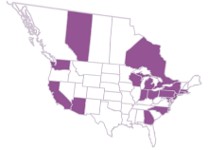
On the map, you can also see all the states and provinces in CAMEO.
Thank You for Sending in Your Poo
Your stool, or poop, is important in CAMEO. Here are some reminders about stool collection:
Stool has markers for inflammation. Genes and small particles, like bacteria, are also studied. These are all important for understanding and discovering more about human health.
You give us stool in CAMEO multiple times. These samples may help us understand how Crohn’s disease responds to anti-TNF therapy.
Your sample goes to a state-of-the-art lab at Emory University in Atlanta, Georgia. Some samples will then be sent to other labs and facilities in North America for research tests.
It can be inconvenient to collect a stool sample. The home stool collection kits are hopefully a big help to you.
Thank you!
Your participation makes the difference towards our goal to help put future pediatric patients on a faster path to Crohn’s disease remission.
The content is solely the responsibility of the authors and does not necessarily represent the official views of the National Institutes of Health. CAMEO (Clinical, endoscopic, and imaging outcomes of children newly diagnosed with Crohn’s disease) is funded by the National Institutes of Health (NIH) through the National Institute of Diabetes and Digestive and Kidney Diseases (NIDDK). Research reported in this publication was supported under Award Number 1U01DK134356-01. cameostudy.org